COLLOQUIUM EHRENFESTII 2026
currently organized by Subodh Patil (read about its history)
Dinner participants: 32 | Follow the live stream
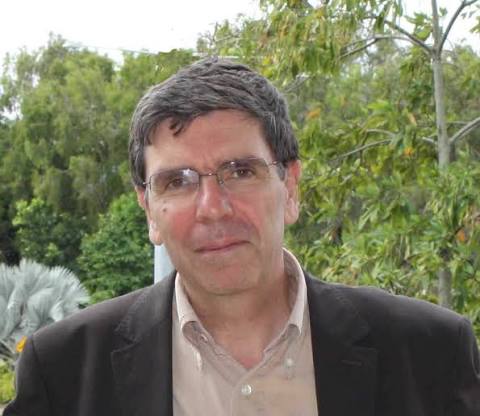
Bernard Derrida
College de France
November 11
7:30 p.m.
CM 1.26
Large deviations in non-equilibrium systems
Over the last 30 years the study of large deviations has become a central aspect in the theory of non-equilibrium systems. They give a generalization of the concept of free energy for non-equilibrium systems. They also give a way to generalize the fluctuation dissipation theorem and to give a probablistic understanding of the Second Law. A number of methods have been developed to calculate these large deviations, in particular a field theory called the Macroscopic Fluctuation Theory which has become the main tool to determine these large deviations for non-equilibrium systems.The Colloquium Ehrenfestii takes place Wednesday evenings starting at 19:30 hours in the Gorlaeus building, lecture hall CM 1.26 (first floor, near main entrance on Einsteinweg 55). Before the Colloquium, there is a common dinner in the Beta Café (far end of the first floor, see map). This dinner starts at 18:00 hours sharp and is free of charge, under the condition that one attends the colloquium and that one has made a reservation before noon on the Tuesday preceding the colloquium.
We count on your presence if you register, please do show up. Meal registrations may close earlier, when 80 persons have signed up.
Search the CE archive or explore the past programs
The search form accepts only one keyword and no special characters are allowed.